Tuesday, August 4, 2015

grace that is greater than all my sin


The good news of the gospel is precisely what gives us the courage to be honest about our sin without being undone by it. It is possible and delightful to engage in soul searching when you are confident that God is not ashamed of you and will never abandon you, no matter what sings you find lurking there. Confession becomes a relief, while repentance is possibly only when we know what it is that we need to repent of. When we grasp the gospel we do not need to be afraid of what we will find in our hearts, for God's grace is far greater than all our sin.
Extravagant grace: God's glory displayed in our weakness, Barbara Duguid

--

Marvelous grace of our loving Lord,
grace that exceeds our sin and our guilt,
yonder on Calvary's mount out-poured,
there where the blood of the Lamb was spilt.

Grace, grace, God's grace, 
grace that will pardon and cleanse within; 
grace, grace, God's grace, 
grace that is greater than all our sin. 

Dark is the stain that we cannot hide,
what can avail to wash it away!
Look! there is flowing a crimson tide;
whiter than snow you may be today.

Marvelous, infinite, matchless grace,
freely bestowed on all who believe;
you that are longing to see his face,
will you this moment his grace receive?

–Julia Johnston

Saturday, July 4, 2015

Seen.

Minnetonkas. On a subway? Oh, Green Line. 

The Green Line has its share of...idiosyncracies.  The switchblade guy who whipped out said weapon to stab the top of his water bottle, thereby transforming a twist-cap bottle into a squeezable bottle (yeah I don't get it either). The semi-regular whiffs of pot and still-lit cigarette butts. The supposed scented oil salesmen who seem only to frequent this particular set of tracks. The neighborhoods along the line, "forgotten" parts of the DC metro area, seldom frequented by the transplants who call the city home. "It runs southeast of SE DC" followed by an "Ah, I see."

Minnetonkas and sweatpants! If only. So comfortable...

But comfortable seemed antonymous from the expression she wears. Sniffles. North Face backpack still on tight. Hood up, shoulders slumped, and eyes glistening with pre-tears --the little pools that neither dry out nor trickle down. 

It takes a deep to sadness cry in a public place. It takes an even deeper one to cry in a loud metal box screeching its way through the underbelly of the city. I would know. 

For the city kid, public transportation is the thirty-five minutes between "On my way" and "Hey!". But on rough days, it's that stretch of time and social interaction you'd wish away if you had a category for other ways to get around.

She dabs the corners of her eyes, gaze unmoved from the spot two feet in front of her sheepskin slipper shoes. 

"Waterfront."

A tissue. I reach into my bag and take one out. Worst case scenario? She screams in my face and curses me out. I can live with that.

"Thank you."
I guess that was the best case scenario. 

"Navy Yard."

The tissue touches the corner of her eyes. Eyes transfixed on that magic spot. 

Just do it. 

I take the seat next to her.
"Look, I'm from New York, so I'm not gonna get offended if you need your space..."
A chuckle. A hint of a smile. 
"...but are you alright?"

"Yeah, I'm alright."


"Where you headed?"
"Home."


"Rough place?"
"Yeah."

Two more stops, shoulder to shoulder.

"Southern Avenue."

She gets up, turns to me,
"Thank you."
"Take care."

--
Dear gal,
There is someone who bears the name, The One Who Sees. Do you know him? 

When the weary, rejected, and lonely come before him, he loves them. The broken find their wholeness, the rebellious renounce their treason, the poor find their provision. 

He isn't far. In fact, he even orchestrates the universe so that He Who Sees may be seen and cherished by those who would gaze upon him. I pray this may be so for you.


Take care.

Monday, April 6, 2015

Suffering to life, Ed T. Welch


Suffering to Life (Source: CCEF)
By Ed T. Welch

We always interpret our suffering. A man said, “that is life” in response to his five-year-old son’s death. In other words, like all of nature, we are born and we die. That is life. Life is to die. All suffering is headed toward death. You can imagine that this man’s response had a measure of grief but was governed by fatalism. After the burial, he would get on with life and not look back as he, too, is headed toward death.

Take suffering. Add isolation. Now remember that human suffering—when it is apart from Jesus—is a messenger who announces that death will render all of life utterly meaningless. That is abject suffering. 

But when someone is resurrected from the dead, and when our lives are bound to his, the interpretation of suffering changes.

We, indeed, suffer. Now add—not isolation—but participation and communion with Christ. In suffering, we come to know him better. Our relationship with him grows.  Now add more. It is one thing to have fellowship in our suffering; it is something else for that fellowship to deepen after death. All our suffering is headed toward life, not death. Death does not have the last word. As we are in Christ, we are being irresistibly taken to life. That is, we are taken into his immortal life. The apostle Paul writes,

For his sake I have suffered the loss of all things . . . in order that I may gain Christ . . . that I may know him and the power of his resurrection, and may share his sufferings, becoming like him in his death, that by any means possible I may attain the resurrection from the dead. (Phil. 3:8, 10-11)
Paul always seems one step ahead of us, which is what we prefer in a guide through unfamiliar experiences. He reminds us that communion and fellowship are the hallmarks of the Christian life, and they remain available to us in suffering. 

In Christ—as our lives are bound to him through faith—we are always headed to life. Yes, there are many surprises and hardships along the way, so many “means” (3:11) that move us toward that resurrection life. But life it is. Jesus said, “I came that you might have life and have it abundantly” (John 10:10). Death itself will not interfere with this promised life. 

Suffering is capable of drawing out the “either/or” nature of human life. We are headed toward either death or life. But we, who have come to know Christ, are blessed to know which one it is for us. We are pilgrims who are walking with The Life and headed to The Life. 


May God give us eyes to see such things.

-----

Amen.

Friday, April 3, 2015

The obligatory post

This is the obligatory post about why I don't or haven't posted.

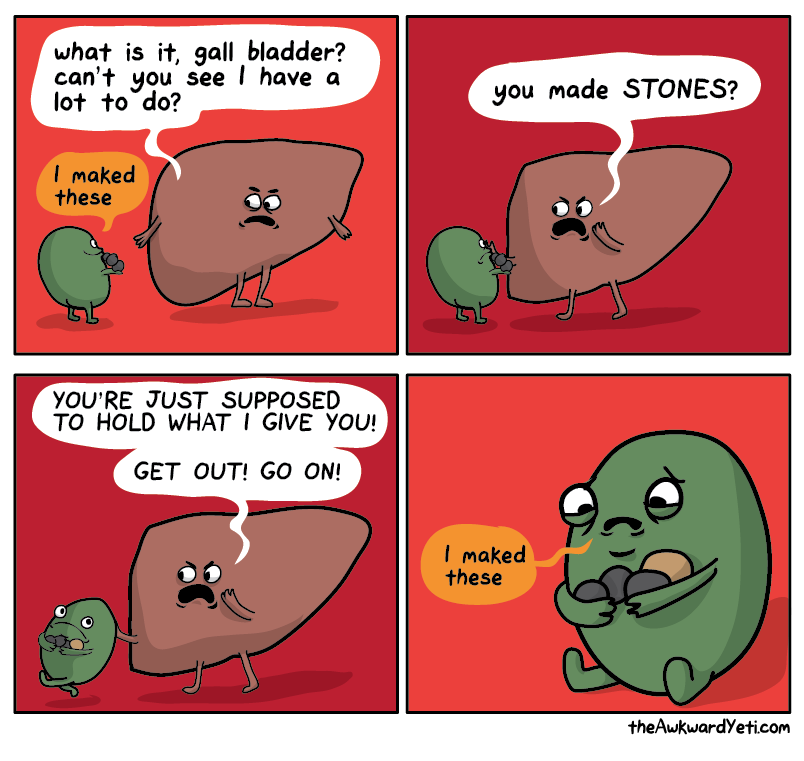
  • The Internet blogosphere is so rich with thought, insight, and artistry that blogging has felt like bringing a potluck dish to a banquet. Or as my little cartoon friend Gallbladder would say, "I maked these."

  • Writing does not come naturally to me. Yep. 
  • Creating a piece that conveys truth in a balance, nuanced, and elegant way to an invisible audience is...difficult. Points and counterpoints may abound. Scope must be broadened or narrowed, but to what degree? Am I making sense, and to whom, concerning what?

So that explains my silence.

And herein lies my reason for writing at least once more.

Nothing I share will be new, mind-blowing, or life-changing. The posts won't come easily to me. They will be rife with limitations of the medium and will bear the trappings of my limitations and weaknesses. But hey, that's life isn't it? An imperfect medium hoping to point beyond itself to a timeless, beautiful, and true Reality.

Saturday, February 21, 2015

Wednesday, August 27, 2014

Saturday, May 3, 2014

Toil, monotony, and change

From GraceDC, full blog here
Sin wears things down until they die. Recently my mother discovered some pictures from my 20th high school reunion. As we flipped through the photos, I was startled by the appearance of my aging friends. “Look at him,” I said. “He looks, well, older.” 
“What do you think you look like?” my mother replied.

Sin also produces “toil,” that continual labor against thorns and thistles. In Genesis 3 the Lord tells Adam, “By the sweat of your face you shall eat bread, till you return to the ground, for out of it you were taken; for you are dust, and to dust you shall return.” With those words he pronounces both the struggle (sweat) and monotony of life (till you return).

Struggle plus monotony equals toil, and “Monday Morning” has come to denote much of this feeling of toil. Words like “drudgery” and “daily grind” come to mind—“same ole’, same ole’”: We sit in the same traffic, drink from the same mug, pass the same scenery, listen to same the songs. We glance at the people beside us and see it in their faces, too. All of us have felt something of the experience Bill Murray so well depicts in Groundhog Day and Lost in Translation. There is little new... 
 
The Bible teaches that the final renovation of all things will be the completion of a work that is already in progress, a work that was initiated by Jesus’ resurrection. As one theologian put it, Jesus’ resurrection sent a “shockwave” of new life into the world. Sunday morning has extended its daylight into Monday morning, and beyond. Although we are not immune from toil, the resurrection of Jesus causes us to toil differently. We now toil with expectation, because the same power which exploded death is living in you.