Monday, April 6, 2015

Suffering to life, Ed T. Welch


Suffering to Life (Source: CCEF)
By Ed T. Welch

We always interpret our suffering. A man said, “that is life” in response to his five-year-old son’s death. In other words, like all of nature, we are born and we die. That is life. Life is to die. All suffering is headed toward death. You can imagine that this man’s response had a measure of grief but was governed by fatalism. After the burial, he would get on with life and not look back as he, too, is headed toward death.

Take suffering. Add isolation. Now remember that human suffering—when it is apart from Jesus—is a messenger who announces that death will render all of life utterly meaningless. That is abject suffering. 

But when someone is resurrected from the dead, and when our lives are bound to his, the interpretation of suffering changes.

We, indeed, suffer. Now add—not isolation—but participation and communion with Christ. In suffering, we come to know him better. Our relationship with him grows.  Now add more. It is one thing to have fellowship in our suffering; it is something else for that fellowship to deepen after death. All our suffering is headed toward life, not death. Death does not have the last word. As we are in Christ, we are being irresistibly taken to life. That is, we are taken into his immortal life. The apostle Paul writes,

For his sake I have suffered the loss of all things . . . in order that I may gain Christ . . . that I may know him and the power of his resurrection, and may share his sufferings, becoming like him in his death, that by any means possible I may attain the resurrection from the dead. (Phil. 3:8, 10-11)
Paul always seems one step ahead of us, which is what we prefer in a guide through unfamiliar experiences. He reminds us that communion and fellowship are the hallmarks of the Christian life, and they remain available to us in suffering. 

In Christ—as our lives are bound to him through faith—we are always headed to life. Yes, there are many surprises and hardships along the way, so many “means” (3:11) that move us toward that resurrection life. But life it is. Jesus said, “I came that you might have life and have it abundantly” (John 10:10). Death itself will not interfere with this promised life. 

Suffering is capable of drawing out the “either/or” nature of human life. We are headed toward either death or life. But we, who have come to know Christ, are blessed to know which one it is for us. We are pilgrims who are walking with The Life and headed to The Life. 


May God give us eyes to see such things.

-----

Amen.

Friday, April 3, 2015

The obligatory post

This is the obligatory post about why I don't or haven't posted.

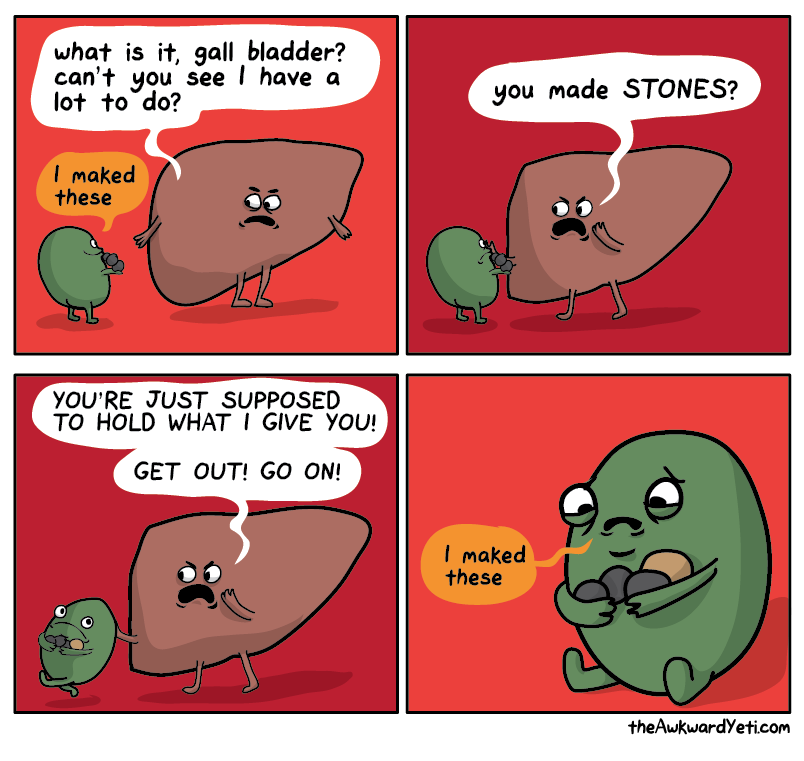
  • The Internet blogosphere is so rich with thought, insight, and artistry that blogging has felt like bringing a potluck dish to a banquet. Or as my little cartoon friend Gallbladder would say, "I maked these."

  • Writing does not come naturally to me. Yep. 
  • Creating a piece that conveys truth in a balance, nuanced, and elegant way to an invisible audience is...difficult. Points and counterpoints may abound. Scope must be broadened or narrowed, but to what degree? Am I making sense, and to whom, concerning what?

So that explains my silence.

And herein lies my reason for writing at least once more.

Nothing I share will be new, mind-blowing, or life-changing. The posts won't come easily to me. They will be rife with limitations of the medium and will bear the trappings of my limitations and weaknesses. But hey, that's life isn't it? An imperfect medium hoping to point beyond itself to a timeless, beautiful, and true Reality.

Saturday, February 21, 2015

Wednesday, August 27, 2014

Saturday, May 3, 2014

Toil, monotony, and change

From GraceDC, full blog here
Sin wears things down until they die. Recently my mother discovered some pictures from my 20th high school reunion. As we flipped through the photos, I was startled by the appearance of my aging friends. “Look at him,” I said. “He looks, well, older.” 
“What do you think you look like?” my mother replied.

Sin also produces “toil,” that continual labor against thorns and thistles. In Genesis 3 the Lord tells Adam, “By the sweat of your face you shall eat bread, till you return to the ground, for out of it you were taken; for you are dust, and to dust you shall return.” With those words he pronounces both the struggle (sweat) and monotony of life (till you return).

Struggle plus monotony equals toil, and “Monday Morning” has come to denote much of this feeling of toil. Words like “drudgery” and “daily grind” come to mind—“same ole’, same ole’”: We sit in the same traffic, drink from the same mug, pass the same scenery, listen to same the songs. We glance at the people beside us and see it in their faces, too. All of us have felt something of the experience Bill Murray so well depicts in Groundhog Day and Lost in Translation. There is little new... 
 
The Bible teaches that the final renovation of all things will be the completion of a work that is already in progress, a work that was initiated by Jesus’ resurrection. As one theologian put it, Jesus’ resurrection sent a “shockwave” of new life into the world. Sunday morning has extended its daylight into Monday morning, and beyond. Although we are not immune from toil, the resurrection of Jesus causes us to toil differently. We now toil with expectation, because the same power which exploded death is living in you.

Monday, March 24, 2014

When Scripture seems silent, Suffering

A helpful resource for understanding the promise that God has given us "all things pertaining to life and godliness."

"His divine power has granted to us all things that pertain to life and godliness, through the knowledge of him who called us to his own glory and excellence..." (2 Peter 1:3)


Scripture is crammed with the words of God that know and guide us. The dilemma is this. If we poll Bible readers about the great themes in Scripture, the first answer most would give is that we are sinners who find forgiveness of sins in Jesus. This, certainly, is the grand theme, but if this is our only way to access Scripture, our care of others will consist of waiting to politely identify sin. Instead, we want to handle Scripture in such a way that it reaches farther and deeper than any mere human form of help.
----
Ten things to do during suffering, Edward T Welch

  1. Don’t be surprised by suffering (1 Pet. 4:12). The Son suffered, so do those who follow the Son. You will not be spared the sufferings that the world experiences, but you will participate in them, both for the world’s benefit and your own.
  2. Live by faith, see the unseen (Heb. 2:2). Normal eyesight is not enough. Your eyes will tell you that God is far away and silent. The truth is that he is close—invisible—but close. He has a unique affection for fellow sufferers. So get help to build up your spiritual vision. Search Scripture. Enlist others to help, to pray, to remind you of the Truth. Ask the God of comfort to comfort you.
  3. Suffering will reveal what is really in your heart. It will test you (Jam. 1:2). Where do you turn when tested? Do you turn toward Jesus or turn inward?
  4. God is God, you are not (Job 38-42). This is important. Humility and submission before the King can quiet some of your questions.
  5. Confess sin. There is nothing new here; it is a regular feature of daily life. Yet it always helps you to see the cross of Jesus more clearly. It is the quickest way to see the persistent and lavish love of God (Heb. 12).
  6. Keep an eye out in Scripture for the Suffering Servant. He has entered into your suffering, and you can enter into his. (Isaiah 39-53, John 10-21)
  7. Speak honestly and often to the Lord. This is critical. Just speak, groan, have someone read you a psalm and say a weak, “Amen.”
  8. Expect to get to know God better while in this wilderness. That is how he usually works with his people (Phil. 3:10-11).
  9. Talk to those who have suffered, read their books, listen to them. You are not alone. Insist on being moved with compassion as you hear other stories of suffering.
  10. Look ahead. We need spiritual vision for what is happening now and for where the universe is heading. We are on a pilgrimage that ends at the temple of God (Ps. 84).

Tuesday, March 4, 2014

Resources for a wondering soul

Some cool things to consider enjoying during Lent: